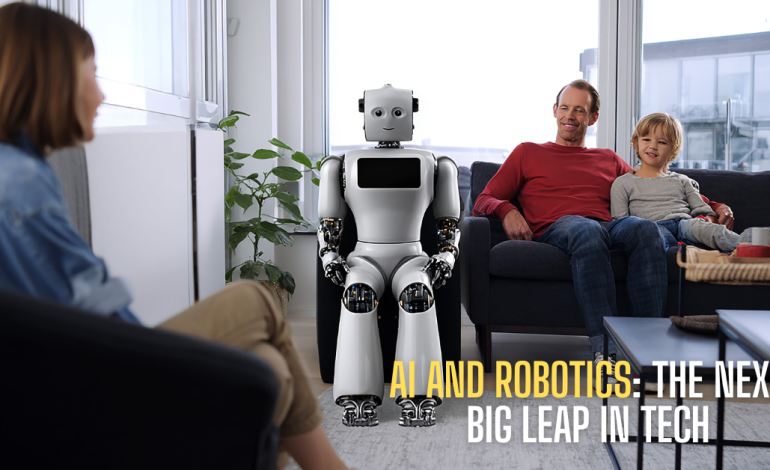
The world is standing at the edge of a technological transformation, and crucial magazine takes you right to the heart of it where Artificial Intelligence and Robotics unite to change the way we live, work, and dream. This is no longer the stuff of sci-fi movies; AI-powered machines and intelligent robots are here, evolving at a pace that’s faster than most of us can comprehend.
From robotic assistants that can cook dinner to AI-driven medical robots performing delicate surgeries, the possibilities are breathtaking. These technologies are not replacing humanity; they’re enhancing it giving us tools to solve complex problems, explore new frontiers, and make everyday life smarter and more efficient.The next big leap in tech is not about man versus machine it’s about man with machine, working together in ways that were unimaginable just a decade ago.
The Convergence of AI and Robotics
AI and robotics are two powerful forces, but when combined, they create a synergy that redefines the boundaries of innovation.
Why AI Needs Robotics
AI provides the “brain” that makes decisions, learns patterns, and adapts over time. Without robotics, these capabilities remain digital. Robotics brings AI into the physical world, enabling it to interact, move, and manipulate real objects.
Why Robotics Needs AI
Robotics alone can follow pre-programmed instructions, but with AI, robots gain the ability to learn from their environment, make autonomous decisions, and even predict outcomes.
Revolutionizing Industries with AI-Powered Robotics
The blend of AI and robotics is transforming sectors at lightning speed.
Healthcare
Robotic surgical systems, powered by AI, perform procedures with precision beyond human capability. Autonomous robots deliver medication, assist in elder care, and disinfect hospital rooms.
Manufacturing
Smart factories use AI-driven robots for assembly, quality control, and predictive maintenance, reducing downtime and increasing efficiency.
Agriculture
From planting seeds to harvesting crops, AI robots monitor soil health, predict weather patterns, and optimize yield with minimal human intervention.
Logistics and Delivery
Autonomous delivery robots and drones are speeding up last-mile logistics, ensuring faster, contactless deliveries.
Robotics in Everyday Life
You don’t have to work in a tech lab to see AI-powered robots in action—they’re entering our homes and cities.
Home Assistants
Robotic vacuum cleaners, lawn mowers, and even cooking assistants are simplifying chores.
Customer Service Bots
Retail stores and airports now deploy AI robots for information assistance, ticketing, and navigation help.
Education and Companionship
Robotic companions are being used for therapy, language learning, and STEM education for children.
The Role of AI in Making Robots Smarter
AI transforms robots from mechanical tools into intelligent collaborators.
Machine Learning for Adaptability
Robots can now learn from mistakes, adjust to changing environments, and improve their performance over time.
Computer Vision for Perception
AI enables robots to “see” and interpret their surroundings, allowing them to identify objects, navigate spaces, and detect hazards.
Natural Language Processing for Communication
Robots can understand and respond to human speech, enabling smoother human-robot interactions.
Challenges of AI and Robotics Integration
While the potential is enormous, the path forward is not without obstacles.
Ethical Considerations
How should society balance innovation with concerns about job displacement and ethical AI use?
Security Risks
Connected robots could be vulnerable to hacking, leading to privacy breaches or operational failures.
Cost Barriers
While costs are decreasing, advanced AI robotics systems remain expensive for small businesses and households.
The Future Possibilities
The next decade promises extraordinary advancements.
Space Exploration
AI robots will lead missions to distant planets, perform maintenance in space, and even build habitats for humans.
Disaster Response
Search-and-rescue robots will navigate dangerous terrains, locate survivors, and deliver aid in disaster zones.
Personalized Home Robotics
Future robots will adapt to individual households, learning personal preferences and needs.
FAQs
What is the difference between AI and robotics?
AI is the intelligence that allows machines to learn and make decisions, while robotics refers to the physical machines that can perform tasks in the real world.
Are AI-powered robots replacing human jobs?
While some roles are being automated, AI robotics also creates new opportunities in engineering, maintenance, programming, and AI ethics.
Can AI robots think like humans?
AI robots can mimic certain cognitive processes, but they do not possess emotions or consciousness like humans.
How safe are AI-powered robots?
When designed with proper safety protocols and cybersecurity measures, AI robots can be very safe for both home and industrial use.
What industries will see the biggest impact from AI robotics?
Healthcare, manufacturing, logistics, agriculture, and space exploration are leading sectors for AI robotics innovation.
Conclusion
AI and robotics are not just trends—they are the backbone of the next technological era. Together, they’re creating machines that are faster, smarter, and more capable than ever before. These innovations have the power to revolutionize industries, make our homes more efficient, and tackle challenges from climate change to space travel.But this leap forward also comes with responsibility. The future will belong to those who embrace these technologies while guiding them with ethics, safety, and human values at the core.We are entering a new chapter where the line between the physical and digital worlds blurs, and where collaboration between humans and intelligent machines becomes the norm.